Upcoming Sessions
- There are no upcoming sessions scheduled
See All Upcoming Sessions
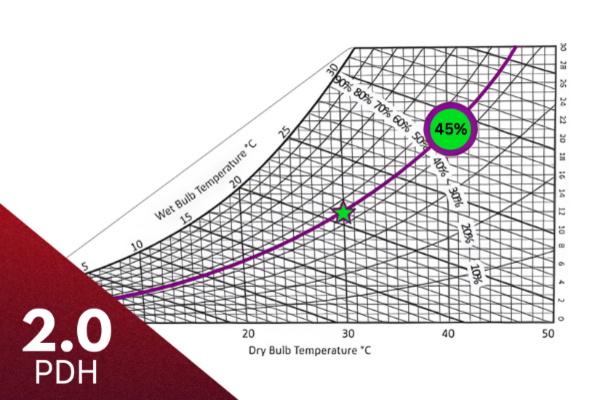
Psychrometrics is the study of the properties of mixtures of air and water vapor. A general knowledge of psychrometrics is very useful in fan application engineering, mainly because the performance of the fan is directly related to the density of the gas. Knowledge of psychrometric principles allows the fan application engineer to measure the amount of water vapor in the air, determine the density of the mixture, and thus accurately predict changes in fan performance. In this self-guided course, you will graphically explore psychrometric properties, such as dry bulb, wet-bulb, relative humidity, dew point, and humidity ratio as they are plotted on the psychrometric chart. Your knowledge of these properties will allow you to accurately calculate density and give you other skills useful in fan application engineering, such as the ability to predict whether condensation will occur in the system. Includes pdf course notes that are handy for future reference, and make it easier for you to follow along, especially if English is not your first language Includes IP - SI spreadsheet calculator for unit conversion You can leave the course and the system will save your progress for when you come back. Explore or re-visit topics in the sequence you desire Learning activities and quiz questions keep you engaged in the topics SI units only Allow at least 2 hours in your schedule for completing this course. Instructor: Ron Wroblewski Course length: 2 hours PDH credits: 2 Read more
Rating
Content
Price

This module navigates the evolving landscape of fan-efficiency codes and regulations, breaking down the complex changes happening at both the federal and state levels. Learners will explore the milestones of US federal fan regulations, proposed updates to model energy codes, and the ongoing regulation unification project. A central focus of this course is understanding the critical importance of third-party certifications, such as the Fan Energy Index (FEI), to ensure compliance with federal test procedures that have been effective since October 2023. This module equips professionals with the precise specification language needed to advocate for certified, legally compliant fan ratings in commercial building projects. Instructors: Michael Ivanovic, Brittany Swan PDH: 0 Read more
Rating
Content
Price
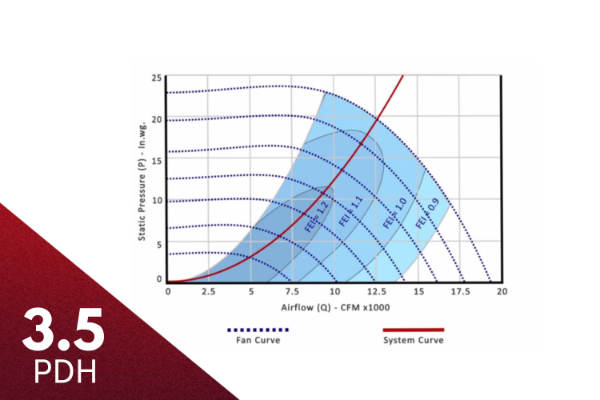
Developed by Air Movement and Control Association (AMCA) International, fan energy index (FEI) is the ratio of the electrical power of a reference fan to the electrical power of an actual fan, both calculated at a given airflow and pressure duty point, so that specifiers can make meaningful comparisons of fans. This training explores the engineering methods used to determine FEI ratings, plus an explanation of how to calculate the reference fan electrical power (FEPref), the actual fan electrical power (FEPact), and the fan energy index (FEI). Includes free copy of AMCA Standard 208 Calculation of the Fan Energy Index and AMCA Standard 207 Fan System Efficiency and Fan System Input Power, Calculation normally sold separately for $90 each - a $180 value. FSO310a Introduction to FEI is a mandatory prerequisite for this course. Includes pdf course notes that are handy for future reference, and make it easier for you to follow along, especially if English is not your first language. Includes FEI spreadsheet calculator for you to compare energy usage among 3 fans. You can leave the course and the system will save your progress for when you come back. Explore or re-visit topics in the sequence you desire. Learning activities, quiz questions and over 40 equations to solve keep you engaged in the topic. Select your region and units - North America (IP) Europe (SI) or China (SI). Allow at least 3 hours in your schedule for completing this course. Instructor: Ron Wroblewski Course length: 3.5 hours Upon completion, you will earn: 3.5 Professional Development Hour (PDH) with AMCA completion certificate The AMCA Air Systems Foundations digital badge (issued via Credly) Note: This micro-credential serves as your official entry point and foundational baseline for AMCA’s stackable credentialing pathways. Read more
Rating
Content
Price
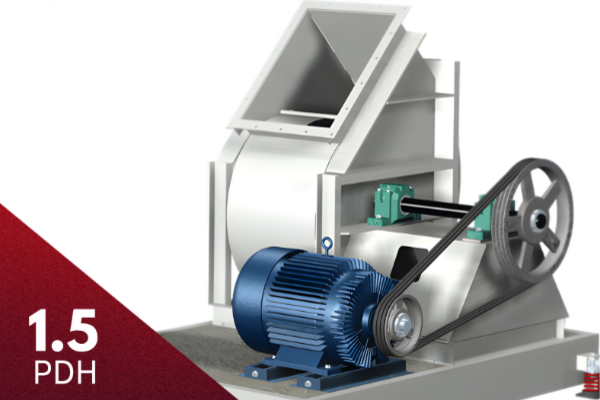
Developed by Air Movement and Control Association (AMCA) International, fan energy index (FEI) is an efficiency metric designed in part to drive significant and quantifiable energy savings through use in codes, utility rebate programs, and regulations. This self-guided course examines FEI as it applies to stand-alone fans. It describes the concepts behind FEI, advantages of FEI compared with the fan-efficiency-grade (FEG) metric it is replacing, how to use FEI to estimate lifetime fan energy savings, and methods for applying FEI in building codes and efficiency programs. Includes free copy of AMCA Standard 208 Calculation of the Fan Energy Index normally sold separately for $90. Includes pdf course notes that are handy for future reference, and make it easier for you to follow along, especially if English is not your first language. Includes FEI spreadsheet calculator for you to compare energy usage among 3 fans. You can leave the course and the system will save your progress for when you come back. Explore or re-visit topics in the sequence you desire. Learning activities and quiz questions keep you engaged in the topics. SI and IP units. Allow at least 1 hour 30 minutes in your schedule for completing this course. Instructor: Ron Wroblewski Course length: 90 minutes Upon completion, you will earn: 1.5 Professional Development Hour (PDH) with AMCA completion certificate The AMCA Air Systems Foundations digital badge (issued via Credly) Note: This micro-credential serves as your official entry point and foundational baseline for AMCA’s stackable credentialing pathways. Read more
Rating
Content
Price
.png)
This webinar was originally broadcast on July 29, 2020. The purpose of this presentation is to provide an in-depth review into Section 717 of the California Building Code. Speaker: Daniel Benton Length: 60 minutes Upon completion, you will earn: 1 Professional Development Hour (PDH) with AMCA completion certificate The AMCA Air Systems Foundations digital badge (issued via Credly) Note: This micro-credential serves as your official entry point and foundational baseline for AMCA’s stackable credentialing pathways. Read more
Rating
Content
Price

This webinar was originally broadcast on June 30, 2021. The purpose of this presentation is to inform industry professionals about the requirements for protecting duct penetrations in fire and smoke rated barriers outlined in Section 717 of the 2021 International Building Code. Speaker: James Carlin Recording length: 60 minutes Upon completion, you will earn: 1 Professional Development Hour (PDH) with AMCA completion certificate The AMCA Air Systems Foundations digital badge (issued via Credly) Note: This micro-credential serves as your official entry point and foundational baseline for AMCA’s stackable credentialing pathways. Read more
Rating
Content
Price
Shopping Cart
Your cart is empty